The bedroom is a private space to unwind, and a rug, as a “gentle foundation” of the space, not only softens the coldness of hard floors but also conveys the resident’s aesthetic and lifestyle through design details. A suitable bedroom rug, without being overly ostentatious, can double the warmth and upgrade the texture of the bedroom. Below are bedroom rug design ideas to suit different styles and needs, from style matching and functional layout to material details, helping you find your own “gentle touch under your feet.”
I. Style Matching
The design of a rug should first and foremost match the overall style of the bedroom, avoiding any jarring effect and making it a “plus” rather than a “dissonance.” Different bedroom styles require completely different rug design logic.
1. Minimalist Wabi-Sabi Style
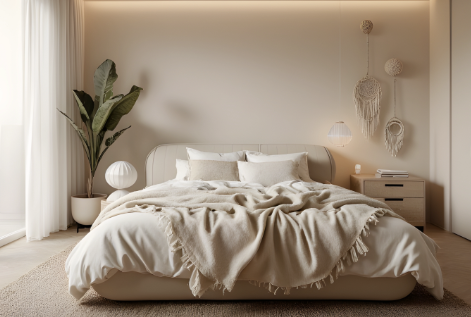
Wabi-sabi style bedrooms emphasize “emptiness, simplicity, and plainness,” pursuing natural textures and the feel of age. Rug design should downplay patterns and enhance the beauty of the material itself. Low-saturation colors are preferred, such as off-white, oatmeal, light khaki, and gray-brown, avoiding bright colors that disrupt the tranquility of the space. For materials, prioritize natural materials such as wool blends, jute, and sisal, which possess a naturally rough yet delicate texture, echoing the “imperfect aesthetics” of wabi-sabi.
In terms of design details, choose plain, solid-color rugs without patterns, or those with subtle textures such as woven patterns or slightly distressed finishes. Avoid covering the entire floor; leaving some blank space enhances the airy feel of wabi-sabi. Paired with wooden bed frames and cotton/linen bedding, the textures underfoot resonate with the natural feel of the space, creating a truly soothing atmosphere.
2. French Romantic Style
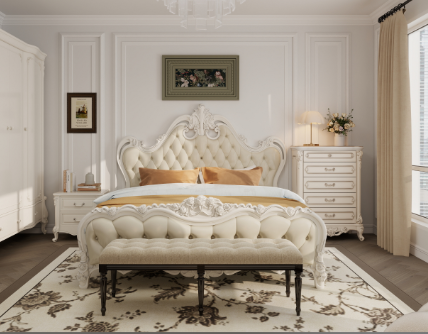
A French romantic bedroom is inseparable from “softness” and “elegance.” Rug design should incorporate romantic elements, balancing sophistication and gentleness. Choose soft colors such as cream white, light pink, Morandi blue, and champagne, which have a gentle filter effect, enhancing the romantic atmosphere of the space. In terms of patterns, classic French elements can be incorporated, such as scrollwork, vine patterns, small floral prints, diamond patterns, or simple wavy lines. The pattern density should not be too high to avoid overly complex and oppressive designs. “Relief” printing or jacquard techniques are preferred for a more refined look.
For materials, prioritize soft and skin-friendly materials such as short-pile wool, velvet, and chenille, which offer a delicate and smooth feel underfoot. Paired with a French-style carved bed frame, lace bedding, and a crystal chandelier, it evokes the gentle corner of a French manor. A bedside rug is a good option, allowing you to step onto a soft carpet the moment you wake up; a large rug with slightly frayed edges can also be chosen to add a touch of casual romance.
3. Modern Luxury Style
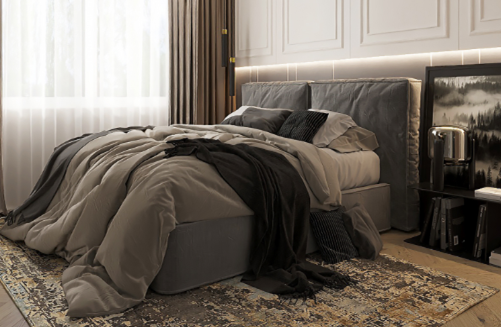
Modern luxury style bedrooms pursue “understated luxury.” The rug design needs to balance texture and sophistication, highlighting taste through materials and details. The color scheme is based on neutral tones, such as dark gray, charcoal black, and beige, accented with metallic colors (gold, silver). These don’t need to be used extensively; just show them along the edges of patterns or in subtle details to enhance the sense of sophistication. For patterns, choose geometric designs (such as irregular lines, diamonds, and circles), abstract patterns, or simple solid-color rugs with metallic trim—simple yet sophisticated.
For materials, prioritize high-density short-pile wool, silk blends, and leather patchwork. High-density materials are less prone to pilling and have an excellent texture, while leather patchwork adds a touch of rugged sophistication, balancing the softness of the bedroom. Pair with a light luxury bed frame, metal ornaments, and silk bedding to extend the sophistication of the bedroom from the floor to the entire space.
4. Nordic Fresh Style
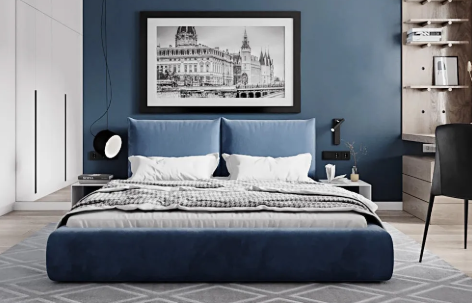
Nordic-style bedrooms emphasize nature, freshness, and healing. Rug designs should incorporate natural elements, and colors can be appropriately vibrant to create a lively atmosphere. The color scheme is based on white and light gray, paired with refreshing shades like light blue, light green, and pale yellow, as if bringing natural light and color into the bedroom. For patterns, classic Nordic elements such as checks, stripes, polka dots, and botanical prints (like eucalyptus leaves and monstera) are all suitable. The patterns should be simple and fluid, with fresh and bright color combinations, avoiding overly heavy tones.
In terms of materials, cotton-linen, wool blends, and short-pile synthetic fibers are preferred, offering good value, easy maintenance, and a soft, comfortable feel underfoot. Large rugs can be used to cover the core area of the bedroom, or you can choose interesting, uniquely shaped rugs (such as round or leaf-shaped ones) to match with a Nordic-style solid wood bed, cotton-linen bedding, and green plants, filling the bedroom with natural vitality. Every step on the rug will feel energetic.
II. Functional Layout
Besides style compatibility, rug design should also consider the bedroom’s layout and usage needs. Different placement positions and sizes can meet different practical needs, making the rug not only beautiful but also functional.
1. Bedside Rugs
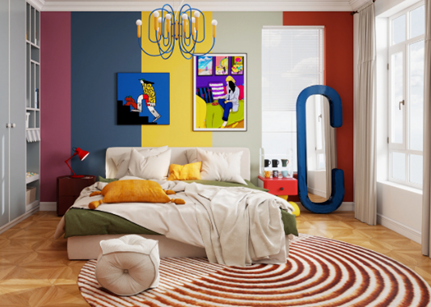
For small bedrooms or those who don’t want rugs to take up too much space, bedside rugs are the best choice. Precisely covering both sides and the foot of the bed, they allow you to step onto a soft rug immediately upon waking, avoiding direct contact with the cold floor.
In terms of design details, choose a bedside rug in the same or complementary color family as your bedding. Prioritize short-pile, easy-care materials to avoid long fibers that are difficult to clean. If the bedroom space is small, you can place narrow-edged rugs only on either side of the bed to save space while enhancing the coziness of the bedroom.
2. Wall-to-Wall Rugs
For large bedrooms or those seeking ultimate coziness, wall-to-wall rugs are an excellent choice. Covering the entire bedroom floor, except for areas under wardrobes and the bed, creates a soft, enveloping feel, making the bedroom a true “healing haven.”
In terms of design details, prioritize solid colors and low-saturation patterns for wall-to-wall rugs to avoid overly complex patterns that can make the space feel cramped. Choose soft, skin-friendly materials such as wool or chenille for an excellent feel underfoot. If you’re worried about the hassle of cleaning wall-to-wall carpets, you can choose a detachable, interlocking wall-to-wall carpet, which is easy to disassemble and clean, balancing practicality and aesthetics.
3. Corner Rugs
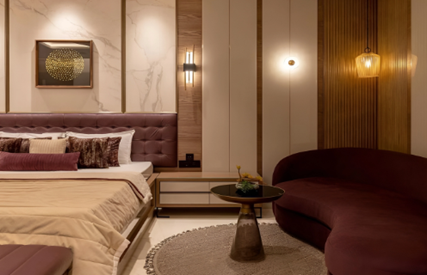
If your bedroom already has basic floor coverings and you want to add a highlight with a rug, choose a corner rug to focus on a relaxing corner, such as next to a bay window, dressing table, or reading nook, creating a personalized, fresh space. The core design principle is to “highlight the corner’s atmosphere and create a harmonious connection with the surrounding furniture.”
In terms of design details, corner rugs can be chosen in bright colors and with stylish patterns to become the “visual focal point” of the space. For example, a round printed rug next to a bay window, paired with cushions and blankets, creates a cozy sunbathing corner; a checkered or striped rug in a reading nook, paired with a single sofa and floor lamp, creates a comfortable reading atmosphere.
III. Material Selection and Detail Design
The texture and durability of a rug depend primarily on the material selection; while the sophistication of the design is often hidden in the details. Different rug materials offer varying degrees of comfort, durability, and cleaning difficulty, so choose according to your needs; detailed design can make the rug appear more refined and enhance the overall quality of the bedroom.
1. Material Selection
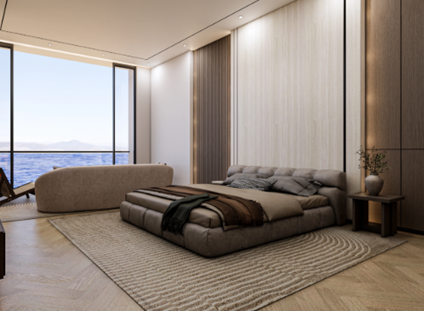
Choose according to your needs, balancing comfort and practicality.
Wool: Advantages include softness, breathability, excellent texture, natural sheen, and high durability; disadvantages include higher price, susceptibility to moisture and shedding, requiring regular grooming. Suitable for those who prioritize quality and have a sufficient budget, ideal for luxurious or French-style bedrooms.
Chenille: Advantages include full, smooth, and delicate pile, strong three-dimensional effect, vibrant colors, and high cost-effectiveness; disadvantages include tangling and pilling, requiring regular brushing. Suitable for those who prioritize softness and a cozy atmosphere, ideal for Scandinavian or minimalist-style bedrooms.
Cotton and Linen: Advantages include good breathability, a cool and refreshing feel, natural and environmentally friendly, easy to clean, and affordable; disadvantages include a slightly stiffer feel and relatively ordinary texture. Suitable for those who prefer a natural style and value practicality, ideal for wabi-sabi or Scandinavian-style bedrooms.
Synthetic Fiber Materials (e.g., polyester, acrylic): Advantages include low price, high durability, low shedding, easy maintenance, and water and stain resistance; disadvantages include relatively poor foot feel and breathability. Suitable for those with limited budgets, children, or pets, balancing practicality and cost-effectiveness.
2. Detailed Design
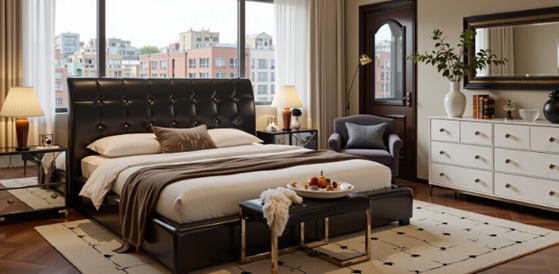
The detailed design of a rug can highlight its style, making a simple rug more sophisticated. For edge design, options include raw edges, overlocked edges, and bound edges. Raw edges offer a casual and natural look, suitable for wabi-sabi and Scandinavian styles; overlocked edges are neat and tidy, suitable for minimalist and high-end styles; bound edges are more durable, suitable for families with children or pets.
Patterns and Techniques: Jacquard weaving creates more three-dimensional and refined patterns, suitable for French and minimalist styles; printed patterns offer rich colors and high cost-effectiveness, suitable for Scandinavian and minimalist styles; hand-woven patterns have a natural texture and outstanding quality, suitable for wabi-sabi and high-end minimalist styles. In addition, adding subtle embroidery details or metallic embellishments to the rug can make it more refined, becoming an “invisible highlight” in the bedroom.
IV. Avoiding Pitfalls
A beautiful rug design not only requires understanding the “bonus elements” but also knowing the “pitfalls” to avoid negatively impacting the overall atmosphere and practicality of the bedroom.
1. Avoid overly complex patterns: The bedroom is a resting space, and overly complex rug patterns can cause visual fatigue and affect the sleep environment, especially in small bedrooms. Choose rugs with simple patterns or solid colors.
2. Avoid excessive color contrast: A rug color that contrasts too much with the bedroom walls and bedding will make the space look cluttered. It is recommended to choose a rug in the same color family as or a complementary color family to maintain color unity.
3. Avoid inappropriate size: A rug that is too small will make the space feel cramped; a rug that is too large will make the space feel oppressive. Choose a rug size appropriate for the bedroom area and bed size to accurately cover the core areas.
4. Avoid excessively long piles: While a long pile feels good underfoot, it’s difficult to clean, easily trapping dirt and bacteria, especially in homes with children or pets. Short-pile rugs are recommended for easier maintenance.
Conclusion
Bedroom rug design is never just about aesthetics; it’s about the harmony of style, function, and material. A well-chosen rug can double the warmth and sophistication of a bedroom, making every step and every inch of your foot feel comforting and therapeutic. Hopefully, these bedroom design ideas will help you find your perfect “softness underfoot” and unlock the secrets to a sophisticated bedroom.