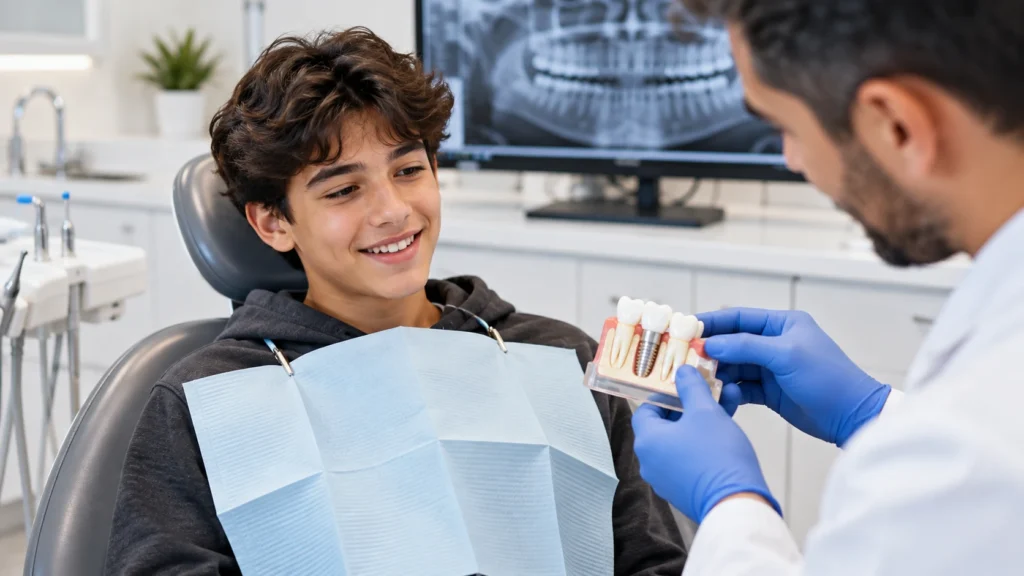
There are many reasons that you may be missing a tooth. You may notice that your smile isn’t as complete. You may realize that you chew foods differently than you used to, or that you avoid using one side of your mouth when eating. You may be missing a tooth towards the front of your mouth where it is visible when you smile. You might also be missing teeth further back that you can’t really see, and you may question whether you should replace them at all.
Regardless of your reason for missing a tooth or teeth, it never hurts to know your options.
If you’re wondering about dental implants to replace missing teeth, keep in mind that you do have other options. Bridges and dentures could also work well for you, depending on the health of your mouth, how many teeth you’re missing, and what you feel comfortable with.
Ahead, we walk through some questions you should ask yourself if you’re thinking about replacing missing teeth. That way you’ll feel more confident about which option may be best for you.
Do You Know What a Dental Implant Is?
An implant is made to take the place of the root of your tooth. The implant is inserted into your jawbone and works as a replacement root to hold a new tooth or another dental restoration in place.
Three parts typically make up a single-tooth implant restoration: the implant, an abutment to connect the tooth to the implant, and the tooth or crown itself.
Your dentist will design your final restoration to fit with your other teeth and your bite.
Different patients may require different types of implant treatment.
Whether you’re missing just one tooth or many teeth will change your options.
Implants can also be used to secure certain types of bridges and dentures. The ideal solution will vary based on how many teeth you’re missing and the overall health of your mouth.
Why You Should Replace a Missing Tooth
You might not feel you need to replace a missing tooth. Gaps in your smile near the back of your mouth don’t always cause pain or noticeable changes to your appearance.
You may not notice it, but that missing tooth can impact how you chew. Also, teeth on either side of the gap can slowly start to drift towards it.
Even the jawbone near the gap may change after losing a tooth. That’s because your natural tooth root is no longer stimulating the area as it did before.
It’s not as simple as saying, “You’ve lost a tooth, so you need an implant.”
Instead, your dentist can take a look at the space and discuss your other teeth. They can explain what might occur if you leave the gap unfilled.
In some cases, monitoring the space may be reasonable. Other times, replacing a missing tooth can improve your ability to chew. It may also help prevent additional problems.
The key is to know your specific situation instead of assuming every gap needs to be filled.
Dental Implants Aren’t for Everyone
While dental implants are a popular tooth replacement option, they aren’t ideal for every patient.
Implants need adequate healthy bone to hold them in place. Plus, your gums need to be healthy, and you need to be suitable for treatment.
Your dentist will likely consider your medical history. This includes any medications you take, your daily oral hygiene routine, and more.
Smoking can affect treatment or may need to be addressed ahead of time. Some medical conditions and current gum disease may affect treatment recommendations.
Bone grafts may sometimes be considered if bone has been lost in the area. However, not all patients require grafting, and it may not be suitable in all cases.
Just because you’re older doesn’t mean implants are not an option. The condition of your mouth and ability to keep the restoration clean are two factors to consider.
The consultation will help determine if implant treatment is a realistic option or if another tooth replacement choice would work better for you.
What to Expect During a Dental Implant Consultation
If you decide you want dental implants, you’ll first need a thorough dental exam before agreeing to treatment.
This exam may include evaluating your gums, remaining teeth, bite and area of the missing tooth. Your dentist might also recommend dental X-rays or other imaging to get a better idea of your bone and surrounding anatomy.
Next, you’ll have the chance to talk about your goals.
Maybe you’re primarily worried about biting. Perhaps you want to replace a front tooth that is visible when you smile. It could be you’re struggling to eat with a removable denture.
There are many questions that can help frame the discussion. If you’re considering dental implants in Danforth, understanding the consultation process can make it easier to decide what to do next.
DentiSmile Dental Centre is located at 2315 Danforth Avenue in Toronto. You can learn about dental implant treatment and consultations by contacting the clinic to ask about available appointment times and next steps.
Confirm what stages of treatment take place at the clinic and if you might need to see a specialist.
Treatment Stages Explained
Dental implant treatment often requires multiple stages, although the exact sequence varies.
The dental implant is surgically placed into position in the jawbone by an appropriately trained dental professional.
Time needs to be allowed for the surrounding mouth tissues to heal. The implant also needs to integrate with the bone. This is known as osseointegration.
Healing times will vary from person to person and treatment plan to treatment plan. Additional stages may be required before the connecting section and replacement tooth can be fitted.
Sometimes patients may be fitted with a temporary replacement tooth whilst the implant heals.
Not all treatments are strictly the same as described above.
Your dentist or clinical team should be able to talk you through what you can expect in terms of treatment stages, timescales and whether a temporary tooth is suitable while you wait for restoration.
You may also wish to ask about what happens if things don’t go to plan and your healing is disrupted.
Implants vs. Bridges vs. Dentures
If you’re replacing missing teeth, it can be helpful to know about all of your options before making a decision.
Dental bridges are another solution for replacing missing teeth. They’re anchored either by surrounding teeth or dental implants. Bridges sometimes require the neighbouring teeth to be prepared so they can securely hold the replacement tooth.
Partial dentures can replace one or more missing teeth and are removable.
Complete dentures are an option if you have no teeth in an arch.
Dental implants can provide support for a fixed crown. Larger bridges and implant-supported dentures can also be attached to implants.
There are benefits and drawbacks to each of these restorative options. And there are things you must do to maintain implants and their restorations.
But how do you know which treatment option is right for you? You can’t simply ask, “Should I get dental implants?”
Instead, consider your dental needs, budget and treatment goals. What option makes the most sense for your specific situation?
What About Cost and Recovery?
The cost of dental implants can vary considerably. There are many factors that determine the final price.
The number of implants you need and the restoration type can change your cost. Diagnostic records and surgical requirements may also affect your quote.
Get your treatment plan in writing. Your dentist or oral surgeon should provide a breakdown of what’s included in your estimate. Ask if there could be additional charges later.
You may get some reimbursement from your dental insurance company. Don’t assume your procedure is covered. Check with your insurance provider before receiving treatment.
Another factor to consider is recovery. You may experience soreness or swelling after your surgery. But every patient has a different experience.
Ask your dental professional what you should expect during recovery. Find out what you can do to support healing. Learn which symptoms should be addressed immediately.
Like any surgery, dental implants come with risks. Infection, damage to nearby structures and failure to integrate with the bone are some of those risks.
Knowing the potential risks will help you make an informed decision. Don’t just think about the desired outcome.
Looking After Dental Implants
A tooth supported by a dental implant is still part of your mouth. This means you need to care for the implant and its restoration regularly, just as you do your natural teeth.
While a replacement tooth cannot develop decay, its gums and supporting tissues still need care. Like natural teeth, plaque can build up around an implant and cause inflammation of the surrounding tissues.
Good oral hygiene practices like brushing, cleaning around your restoration and visiting your dentist for regular exams are necessary.
Your dentist may advise special tools to clean around your restoration depending on the type of replacement tooth used.
Contact your dentist if you notice any bleeding, swelling, pain or movement around an implant.
Don’t forget about your implant either. Though it’s made of sturdy materials, your replacement tooth is not indestructible. Take care of it as you would your natural teeth and other dental restorations.
Questions to Ask Before You Decide
If you think dental implants are right for you, make sure to ask questions during your consultation, like:
- Am I really a candidate for implant treatment?
- What are my other tooth replacement options?
- Will I need a bone graft or other procedure first?
- Who will perform the implant surgery?
- How many visits will be required?
- What does the treatment estimate include?
- What are the risks specific to my condition?
- How do I care for my restoration?
There may be several ways to properly replace a missing tooth. Take the time to learn about your options. Ask your dentist what to expect during treatment and speak up if there’s anything you don’t understand.
Choosing how to replace a missing tooth is a big decision for your smile. Start by consulting with a dentist who can evaluate your specific needs.