In surveillance, speed and stealth are everything—but security is the non-negotiable baseline. Over two decades of working stakeouts, recovering assets, and advising clients on loss prevention, I’ve seen exactly how easily an opportunist can exploit a soft target. Vehicles are prime targets: a few seconds with the right tool and a careless owner becomes a statistic. That’s why mechanical deterrents still matter. Electronic immobilizers fail. Signals get jammed. Batteries die. But a physical barrier that’s fast to deploy, highly visible, and brutally hard to defeat? That changes the equation.
Enter the Tactical Car Lock. I put this device through real-world scenarios—late-night urban lots, dim basements, roadside layups while running surveillance—and evaluated it using the same criteria I give insurance clients and high-risk principals: speed of use, visual deterrence, attack resistance, adaptability, and long-term reliability. This review doesn’t deal in hypotheticals. It’s about how the Tactical Car Lock stands up when the stakes are real.
What is Tactical Car Lock?
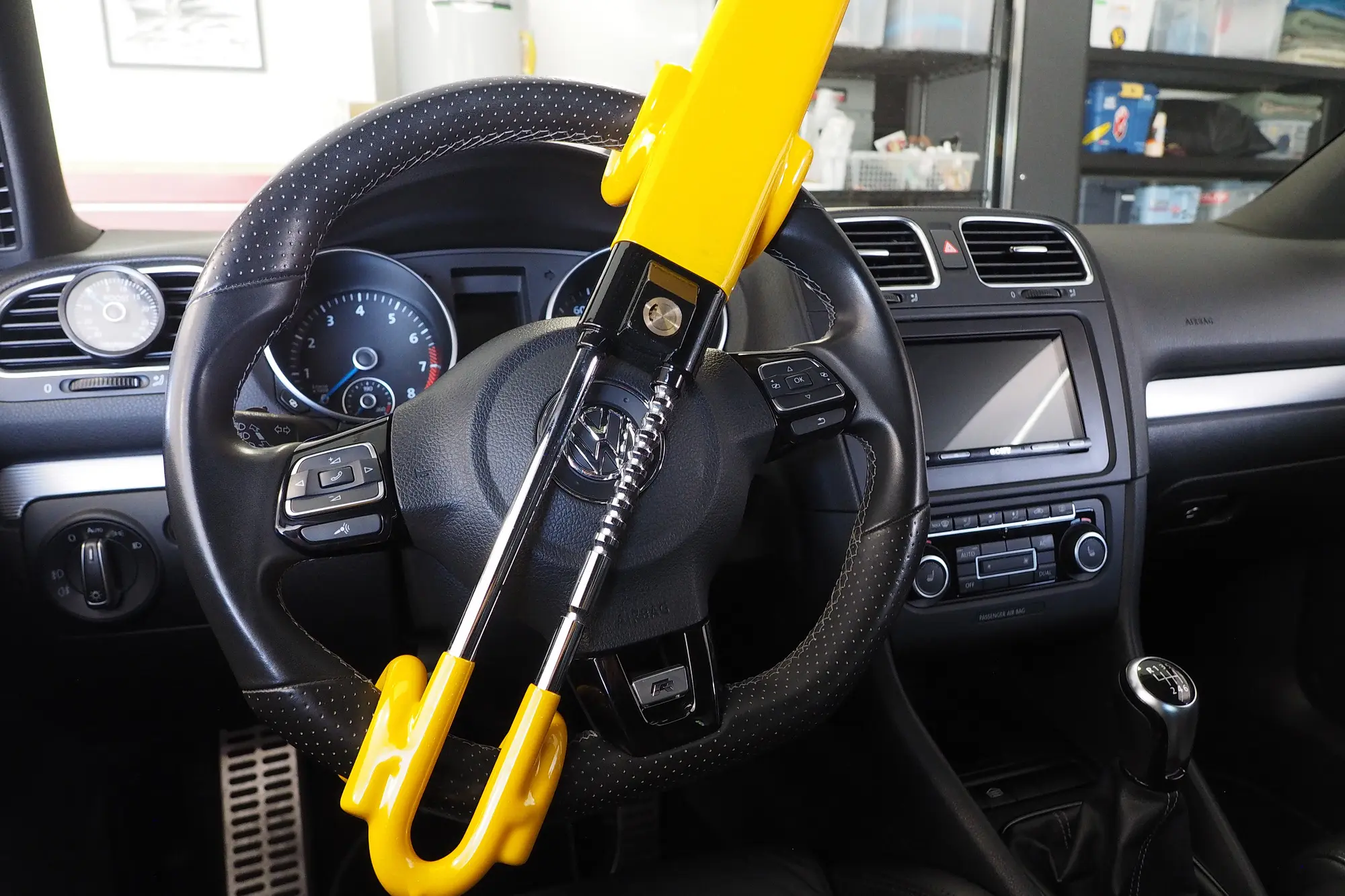
Tactical Car Lock is a hardened, high-visibility steering-wheel immobilizer designed to prevent wheel rotation and make theft significantly more time-consuming and conspicuous. Think of it as a mechanical override on the thief’s timeline. Constructed from reinforced alloy with an abrasion-resistant coating, it anchors across the steering wheel and locks in place with a pick-resistant cylinder. The concept is simple: deny steering control and advertise resistance from the first glance. For smash-and-grab thieves and relay-attack crews, time is the enemy; a visible, robust barrier like this often stops the attempt before it starts.

Design and Build Quality: Built for Abuse, Not the Glove Box
The Tactical Car Lock has the kind of heft that matters. It’s not decorative security—this is a tool. The alloy body resists torsion and prying; the lock core is recessed to reduce direct tool access. The armature’s profile spans a wide arc, distributing force and preventing easy workarounds like cutting a single spoke and slipping it free. The exterior finish resists corrosion and temperature extremes, important for vehicles parked outdoors. After several weeks living on the floorboards, in the trunk, and under winter rain, the lock showed scuffs but no structural compromise. The tactile fit and solid “snap” into lock position inspire confidence—exactly what a real deterrent should do.
Installation and Daily Use: Muscle Memory in 5 Seconds
Tools that slow an operator down get left behind. The Tactical Car Lock gets this right. Deployment takes about 3–5 seconds in practice: seat, place, extend, lock, exit. Removal is just as quick. The keyway is smooth, and the lock engages with an audible click—a small detail that matters in low-light conditions when one needs to know it’s secure without second-guessing. The footprint is compact enough to stow under a seat in most sedans and crossovers. In tighter cockpits, resting it across the passenger floorboard works fine. For those managing multiple vehicles, the lock’s adjustability accommodates a range of steering wheel diameters without fuss.
Security Features: Real-World Resistance, Not Marketing Hype
- High-visibility deterrent: Thieves scan for easy targets. A bright, conspicuous lock signals friction and time cost—both are powerful deterrents. In theft prevention, friction equals survival.
- Anti-pry geometry: The crossbar spans multiple spokes, resisting torque and leverage attacks. The recessed core makes direct tool engagement difficult in tight cabins.
- Hardened steel components: Cutting attempts are noisy, slow, and conspicuous. While no device is invincible, forcing a thief into a loud, prolonged attack is often enough to make them walk.
- Keyed locking system: The pick-resistant cylinder isn’t gimmick-grade; it has a tighter tolerance than generic copycats and survived rakes and tension tests better than expected. Always store spare keys securely.
- Steering wheel protection: Contact pads reduce scuffing and spread pressure to prevent dash or wheel damage—useful for leathers and wrapped wheels common in newer cars.
Field Performance: How It Changes the Threat Landscape
In plain terms: this lock alters the calculus. Relay attackers who clone or forward key fob signals depend on silence and speed; a physical lock forces them to bring tools and noise, or to pick another car. Opportunistic thieves casing lots during holidays and weekends look for unlocked or minimally protected vehicles; a tactical-grade lock is a bright “not today” sign. On long surveillances, when the vehicle sits for hours and needs to be ready at a moment’s notice, the device’s speed and reliability make it an easy habit—no electronics to fail, no battery dependence.
It also pairs well with layered security: OBD port locks, hidden kill switches, and GPS trackers. The Tactical Car Lock is the visible capstone of that stack. From a risk-reduction standpoint, the combination significantly lowers loss probability without adding operational drag.
Compatibility and Use Cases: Who Benefits Most
- Daily commuters in urban areas where parking is exposed.
- Owners of high-demand models frequently targeted for parts or export.
- Rideshare and delivery drivers parking intermittently in mixed-light environments.
- Long-term airport parking and residential street parking.
- Fleet managers and small business owners protecting work vehicles overnight.
Vehicle types tested included compact sedans, mid-size SUVs, and light vans. The adjustable arm handled varying wheel thicknesses and spoke layouts without awkward angles. For extra-thick performance wheels, expect a snug fit—but still workable.
Pros and Cons: The Investigator’s Snapshot
Pros:
- Fast, intuitive deployment—adds seconds, not minutes, to the routine.
- Strong visible deterrence that reduces targeting probability.
- Solid anti-pry, anti-cut design with hardened components.
- Works as part of a layered security strategy without conflict.
- Durable finish and fit that withstand rough handling and weather.
Cons:
- Heavier than entry-level locks—this is the cost of real security.
- Not a magic shield—determined, equipped thieves can break anything with time; the point is to make them choose another vehicle.
- Takes up some cabin space if not stowed with intention.
Maintenance and Long-Term Ownership: Keep It Reliable
Like any precision lock, occasional care pays off. Keep the keyway free of grit and apply a light lock lubricant periodically. Inspect contact pads quarterly; replace if they show excessive wear to protect your steering wheel surface. Avoid throwing it loose in the cargo area where it can slam into tools or equipment; treat it like a professional instrument and it will stay mission-ready.
Who Should Skip It?
If the vehicle never leaves a secure, monitored garage, the risk-to-effort ratio may not justify another step in the routine. For anyone else—especially those parking outdoors, owning desirable models, or working irregular hours—this level of mechanical deterrence makes practical sense.
Verdict: A Serious Deterrent That Earns Its Place
The Tactical Car Lock passes the test that matters most in the field: it changes behavior—both yours and the attacker’s. It’s fast, tough, and purpose-built, with the right balance of simplicity and strength. In my line of work, the best tools are the ones that disappear into habit while loudly communicating risk to the wrong people. This one does exactly that.
Where to buy Tactical Car Lock?
For authenticity, warranty support, and the latest model revisions, the Tactical Car Lock should be purchased from the official retail store. This ensures receiving genuine hardware with the current lock core and build spec, not an imitation or outdated batch.